From Theory to Production: Immersion Cooling Delivers
While the technical advantages of immersion cooling are compelling on paper, the true test of any data center technology lies in real-world deployment. Fortunately, industry leaders across multiple sectors have moved beyond pilot programs to production-scale implementations, generating concrete performance data that validates immersion cooling’s transformative potential.
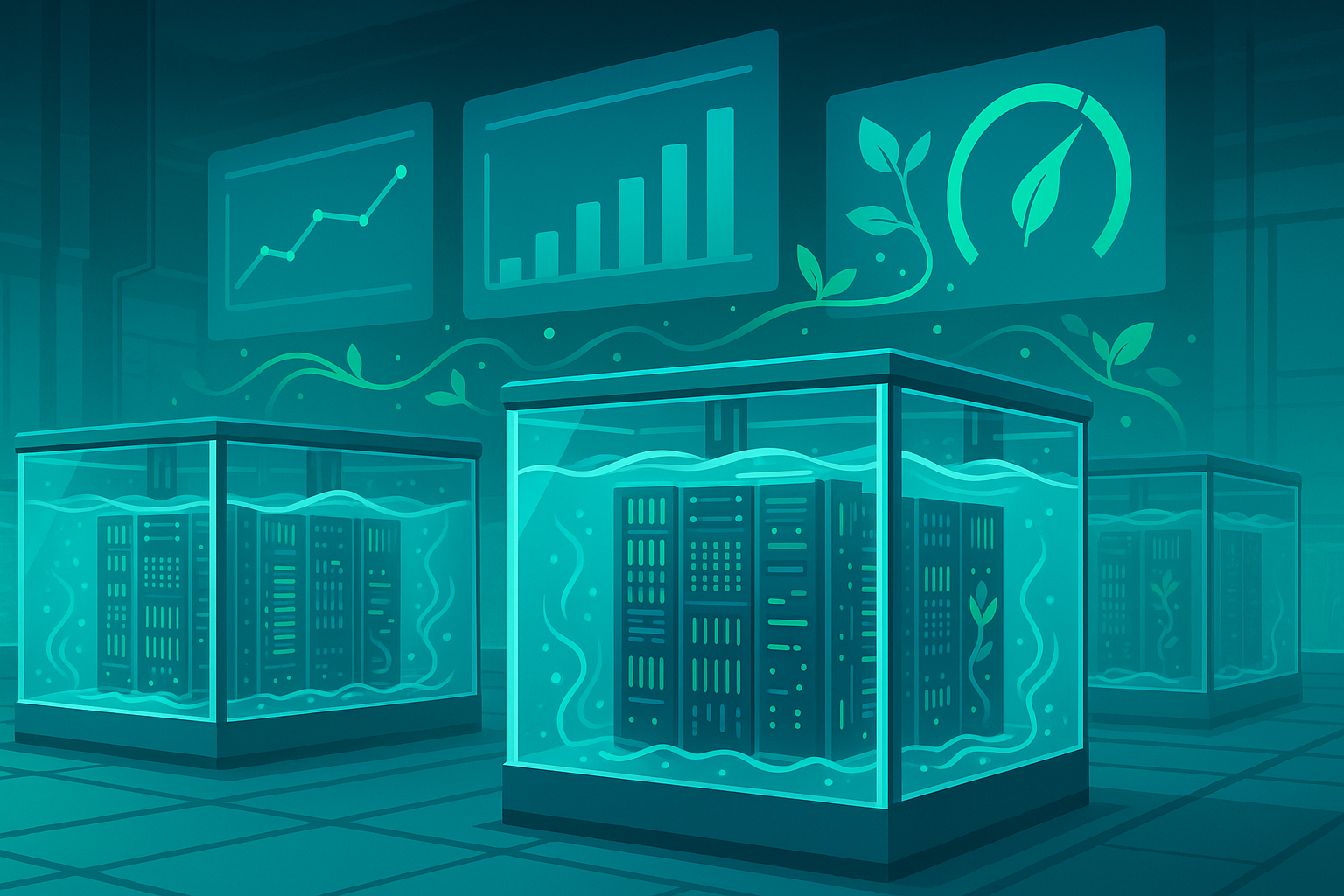
The results speak for themselves: 30%+ energy savings, elimination of thermal throttling, dramatic increases in compute density, and measurable improvements in equipment reliability. These aren’t theoretical projections—they’re documented outcomes from organizations that have committed significant resources to immersion cooling technology.
Microsoft: Pioneering Two-Phase Immersion at Scale
Microsoft’s journey into immersion cooling represents the most significant validation of the technology’s enterprise readiness. As the first major cloud provider to deploy two-phase immersion cooling in production environments, Microsoft has generated unprecedented data on large-scale liquid cooling performance.
The Production Deployment
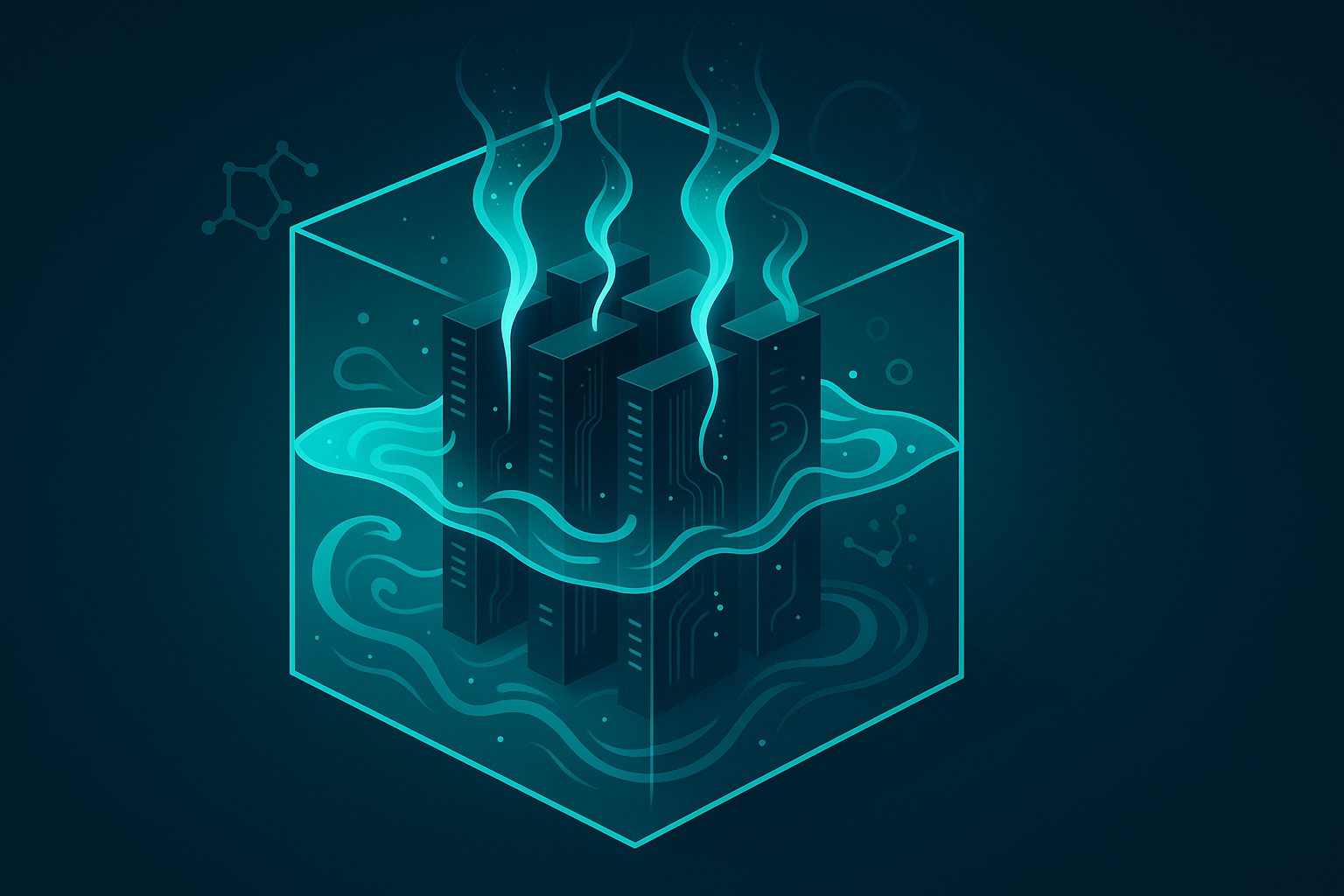
Microsoft’s implementation centers on their innovative approach to two-phase immersion cooling, where servers operate while completely submerged in dielectric fluid that boils at approximately 50°C. This deployment represents a fundamental shift from experimental installations to production infrastructure supporting live customer workloads.
The system design eliminates the complex air handling infrastructure that traditionally dominates data center design. Instead of elaborate hot and cold aisle configurations, raised floors, and massive air conditioning systems, Microsoft’s immersion-cooled servers operate in sealed tanks with elegant simplicity. The boiling process creates a passive thermosiphon effect where vapor naturally rises to condensers, returns to liquid state, and gravity-feeds back to the servers.
Performance Metrics That Matter
Microsoft’s deployment has generated compelling performance data across multiple dimensions:
Thermal Performance: Servers operate continuously at full power with zero thermal throttling—a capability impossible with air cooling under equivalent heat loads. Component temperatures remain consistently within optimal ranges even during peak computational demands.
Energy Efficiency: The elimination of server fans, reduced facility cooling infrastructure, and the superior heat transfer properties of liquid cooling combine to deliver documented energy savings exceeding 30% at the facility level. This translates directly to reduced operational costs and improved sustainability metrics.
Reliability Improvements: The stable thermal environment reduces thermal cycling stress on components, potentially extending hardware lifespan significantly. The elimination of moving parts (fans) removes a common failure point, while the sealed environment protects components from dust and environmental contaminants.
Compute Density: The deployment enables rack power densities that would be impossible with traditional air cooling, allowing Microsoft to achieve greater computational capability per square foot of data center space.
Operational Insights
Perhaps most importantly, Microsoft’s production deployment has proven that immersion cooling integrates successfully with enterprise data center operations. Maintenance procedures, while different from traditional approaches, are manageable within standard operational frameworks. The sealed environment actually simplifies certain maintenance activities by eliminating concerns about airflow disruption during component access.
The deployment has also validated the long-term stability of dielectric fluids in production environments. Fluid degradation rates, chemical compatibility with diverse component materials, and thermal performance stability all meet or exceed expectations established during pilot testing.
Shell: Sustainable HPC Through Immersion Cooling
Shell’s deployment of immersion cooling technology in their Houston data center represents one of the largest implementations focused specifically on high-performance computing workloads. This installation provides critical insights into immersion cooling’s capabilities for computationally intensive applications while supporting Shell’s broader sustainability objectives.
The 864-Server Implementation
Shell’s Houston facility houses 864 immersion-cooled servers, each equipped with dual 4th Generation AMD EPYC processors optimized for HPC workloads. This substantial deployment scale provides statistically significant performance data while supporting real production computing requirements for Shell’s global operations.
The implementation choice reflected Shell’s dual objectives of achieving superior computational performance while advancing their net-zero emissions commitments. Traditional air cooling would have required significantly larger facility infrastructure to support equivalent computational capability, directly conflicting with efficiency and sustainability goals.
Quantified Benefits
Shell’s deployment has generated concrete performance metrics that demonstrate immersion cooling’s value proposition:
Energy Efficiency Gains: The facility achieves Power Usage Effectiveness (PUE) metrics significantly better than equivalent air-cooled installations. The elimination of server fans and reduced facility cooling requirements contribute to measured energy consumption reductions of approximately 35% compared to traditional cooling approaches.
Computational Density: The immersion cooling implementation enables Shell to concentrate substantial computational capability within a relatively compact facility footprint. This density improvement provides both economic and environmental benefits by maximizing computing power per unit of real estate and infrastructure investment.
Operational Reliability: The stable thermal environment has contributed to improved system uptime and reduced maintenance requirements. HPC workloads, which often run continuously for extended periods, particularly benefit from the consistent operating environment that immersion cooling provides.
Sustainability Impact
Shell’s implementation demonstrates immersion cooling’s contribution to corporate sustainability objectives. The energy efficiency improvements directly reduce carbon emissions associated with computational workloads. The compact facility design minimizes land use and construction material requirements. The elimination of refrigerants in traditional air conditioning systems reduces environmental impact from cooling infrastructure.
The deployment supports Shell’s broader sustainability strategy while proving that environmental responsibility and computational performance are not mutually exclusive objectives.
NVIDIA: Research Leadership and Industry Advancement
NVIDIA’s involvement in immersion cooling extends beyond deploying the technology to actively advancing its capabilities through research partnerships and industry collaboration. Their participation in the Department of Energy’s COOLERCHIPS program exemplifies how leading technology companies are investing in cooling innovation to support next-generation computing requirements.
COOLERCHIPS Program Contributions
NVIDIA’s participation in the DOE’s COOLERCHIPS (Cooling Operations Optimized for Leaps in Energy, Reliability, and Carbon Hyperefficiency for Information Processing Systems) program focuses on developing advanced cooling technologies for high-performance computing applications. This research specifically addresses the thermal challenges associated with AI and machine learning workloads that generate unprecedented heat densities.
The program has enabled NVIDIA to explore immersion cooling’s potential for their most advanced GPU architectures. Research findings directly inform product development decisions, ensuring that future GPU designs optimize for liquid cooling deployment rather than treating it as an afterthought.
Digital Twin Cooling Optimization
NVIDIA’s advanced modeling capabilities have enabled sophisticated analysis of immersion cooling performance through digital twin technology. These models simulate thermal behavior across complex cooling systems, enabling optimization that would be impossible through physical testing alone.
The digital twin approach allows NVIDIA to predict thermal performance under varying conditions, optimize fluid flow patterns, and identify potential efficiency improvements before physical implementation. This modeling capability accelerates immersion cooling development while reducing deployment risks for customers.
Hardware Design Evolution
NVIDIA’s research has influenced their hardware design philosophy to embrace liquid cooling as a primary thermal management strategy rather than an exotic alternative. Future GPU architectures incorporate design elements that optimize performance specifically for immersion cooling environments.
This design evolution represents a fundamental shift in semiconductor development, where thermal management considerations influence chip architecture from the earliest design stages rather than being addressed through aftermarket cooling solutions.
Quantified Performance Analysis
The collective data from major deployments enables quantitative analysis of immersion cooling’s performance advantages across key metrics that matter to data center operators.
Energy Efficiency Metrics
Power Usage Effectiveness (PUE) Improvements: Production deployments consistently demonstrate PUE improvements of 15-25% compared to equivalent air-cooled facilities. Microsoft’s implementation shows PUE values approaching 1.1, representing near-optimal efficiency where almost all facility power directly supports computing rather than cooling infrastructure.
Cooling Energy Reduction: Traditional data centers allocate 30-40% of total power consumption to cooling systems. Immersion cooling implementations reduce this to 10-15%, freeing substantial electrical capacity for additional computing resources or reducing overall facility power requirements.
Server-Level Efficiency: The elimination of server fans reduces individual server power consumption by 5-10% while enabling higher performance through elimination of thermal throttling. This combination delivers measurable improvements in computational performance per watt.
Thermal Performance Data
Temperature Consistency: Immersion cooling maintains component temperatures within 2-3°C variations across entire server populations, compared to 10-15°C variations typical in air-cooled environments. This consistency eliminates hot spots that limit overall system performance.
Thermal Throttling Elimination: Production deployments demonstrate zero thermal throttling events under full computational loads. GPUs and CPUs maintain maximum performance continuously, delivering the full computational capability that organizations have purchased.
Component Temperature Reductions: Immersion cooling typically maintains component temperatures 15-25°C lower than equivalent air cooling under similar heat loads. This temperature reduction extends component lifespan while improving performance stability.
Reliability and Maintenance Metrics
Mean Time Between Failures (MTBF): The stable thermal environment and elimination of fans contribute to measured improvements in component reliability. While long-term data collection continues, early indicators suggest 20-30% improvements in MTBF compared to air-cooled equivalent systems.
Maintenance Simplification: Despite initial concerns about maintenance complexity, production deployments have demonstrated that immersion cooling maintenance procedures integrate successfully with existing data center operations. Some maintenance activities are actually simplified due to the elimination of airflow considerations and dust contamination.
Fluid Longevity: Production deployments show that modern dielectric fluids maintain their properties for 3-5 years under normal operating conditions, with some formulations potentially lasting longer. Fluid replacement costs, while significant, are offset by energy savings and performance improvements.
Economic Impact Analysis
The financial benefits of immersion cooling extend beyond simple energy cost reductions to encompass multiple economic advantages that improve total cost of ownership.
Capital Expenditure Considerations
Infrastructure Simplification: Immersion cooling eliminates substantial facility infrastructure requirements including complex air handling systems, raised floors, and hot aisle containment. These eliminations can reduce facility construction costs by 15-25% for new builds.
Compute Density Economics: The ability to achieve 3-5x higher rack power densities enables organizations to concentrate computational capability within smaller facility footprints. This density improvement reduces real estate costs, electrical infrastructure requirements, and construction timelines.
Equipment Longevity: The stable thermal environment potentially extends hardware lifespan by 20-30%, reducing replacement frequency and improving capital equipment ROI. This longevity improvement partially offsets the higher initial costs associated with immersion cooling implementation.
Operational Expenditure Benefits
Energy Cost Reductions: Production deployments consistently demonstrate 30-40% reductions in cooling energy consumption, translating directly to reduced electricity costs. In facilities with high energy costs or peak demand charges, these savings can be substantial.
Maintenance Cost Changes: While immersion cooling requires different maintenance procedures, total maintenance costs often decrease due to improved component reliability and elimination of fan replacements. Fluid replacement represents a new cost category but is typically offset by other maintenance reductions.
Performance Productivity: The elimination of thermal throttling enables organizations to extract full value from their hardware investments. GPUs and CPUs deliver consistent maximum performance, improving the productivity of computational workloads and potentially reducing the total hardware required for specific tasks.
Industry Sector Applications
Immersion cooling deployment patterns reveal specific sector applications where the technology delivers particularly compelling value propositions.
High-Performance Computing
HPC environments benefit dramatically from immersion cooling’s ability to eliminate thermal throttling while supporting extreme computational densities. Research institutions, energy companies, and financial services organizations with intensive computational requirements have been early adopters due to the direct correlation between thermal management and computational productivity.
Artificial Intelligence and Machine Learning
AI/ML workloads generate exceptional heat densities that challenge traditional cooling approaches. Training large language models, computer vision systems, and deep learning applications require sustained high-performance operation that immersion cooling enables. The technology allows AI researchers to focus on algorithmic development rather than thermal constraints.
Cloud and Hyperscale Computing
Major cloud providers are adopting immersion cooling to meet sustainability commitments while improving service delivery capabilities. The technology enables more efficient utilization of data center real estate and electrical infrastructure, supporting the massive scale requirements of cloud computing.
Edge Computing Applications
Emerging edge computing deployments in challenging environments benefit from immersion cooling’s simplified infrastructure requirements and environmental resilience. Industrial settings, remote locations, and mobile applications can leverage immersion cooling’s compact design and operational simplicity.
Future Performance Trajectories
The performance data from current deployments provides insights into immersion cooling’s trajectory as the technology matures and scales.
Efficiency Improvement Trends
Fluid Development: Next-generation dielectric fluids promise improved thermal properties, reduced costs, and enhanced environmental characteristics. These developments will further improve immersion cooling’s economic attractiveness.
System Optimization: Experience from production deployments enables system design optimizations that improve efficiency and reduce costs. Standardization efforts will drive down implementation costs while improving reliability.
Integration Advancement: Better integration with facility infrastructure and management systems will streamline operations and reduce deployment complexity.
Scale Economics
Volume Production Benefits: As immersion cooling scales beyond niche applications, manufacturing volumes will drive down component costs and improve availability. This scale effect will accelerate adoption across broader market segments.
Ecosystem Maturation: The growing ecosystem of suppliers, service providers, and specialized expertise will reduce deployment risks and improve support quality.
Standardization Impact: Industry standardization efforts will reduce custom engineering requirements and enable more predictable deployment timelines and costs.
The evidence from production deployments clearly demonstrates that immersion cooling has evolved from experimental technology to viable data center infrastructure. Organizations implementing the technology are achieving measurable benefits in energy efficiency, thermal performance, computational capability, and operational simplicity.
As we’ll explore in our next article, the transition from proof-of-concept to production deployment requires addressing practical implementation challenges including facility integration, staff training, maintenance procedures, and operational changes. The success stories examined here provide the foundation for understanding how to navigate these implementation realities effectively.
In our next article, we’ll examine the practical considerations, challenges, and best practices for organizations considering immersion cooling implementation, drawing insights from successful deployments to guide decision-making and project planning.